


“The semester exceeded budget expectations, and we are confident we will close the year on a strong note.”
In an interview with Diario El Comercio, Pedro Lerner, CEO of Grupo UNACEM, notes that the company is in the final stretch of its 2022–2026 consolidation phase, which will run through 2026, after which it plans to drive a more active growth cycle toward 2030.
JRPR Investments’ tender offer seeks to acquire an additional 3% stake in UNACEM. How do you interpret this transaction?
It is a sign of confidence by the controlling group in the business.
Does UNACEM’s share price reflect the Group’s performance?
This is nothing new. We know that, due to the lack of market liquidity, the share price does not reflect the Group’s fundamentals.
In the first quarter, revenues grew but EBITDA fell by 7%. In the second quarter, you achieved a 34% margin. What explains this recovery? In the first quarter, a series of major maintenance works were carried out, especially on kilns in the United States; a large portion of this maintenance expense was concentrated in the first quarter. This partly explains the lower costs in the second quarter and the improved margins. As a result, we saw a positive second quarter. The performance of the first half exceeded budget expectations, and we are confident we will close the year on a strong note.
You executed CAPEX of more than US$428 million during the semester. What return do you expect?
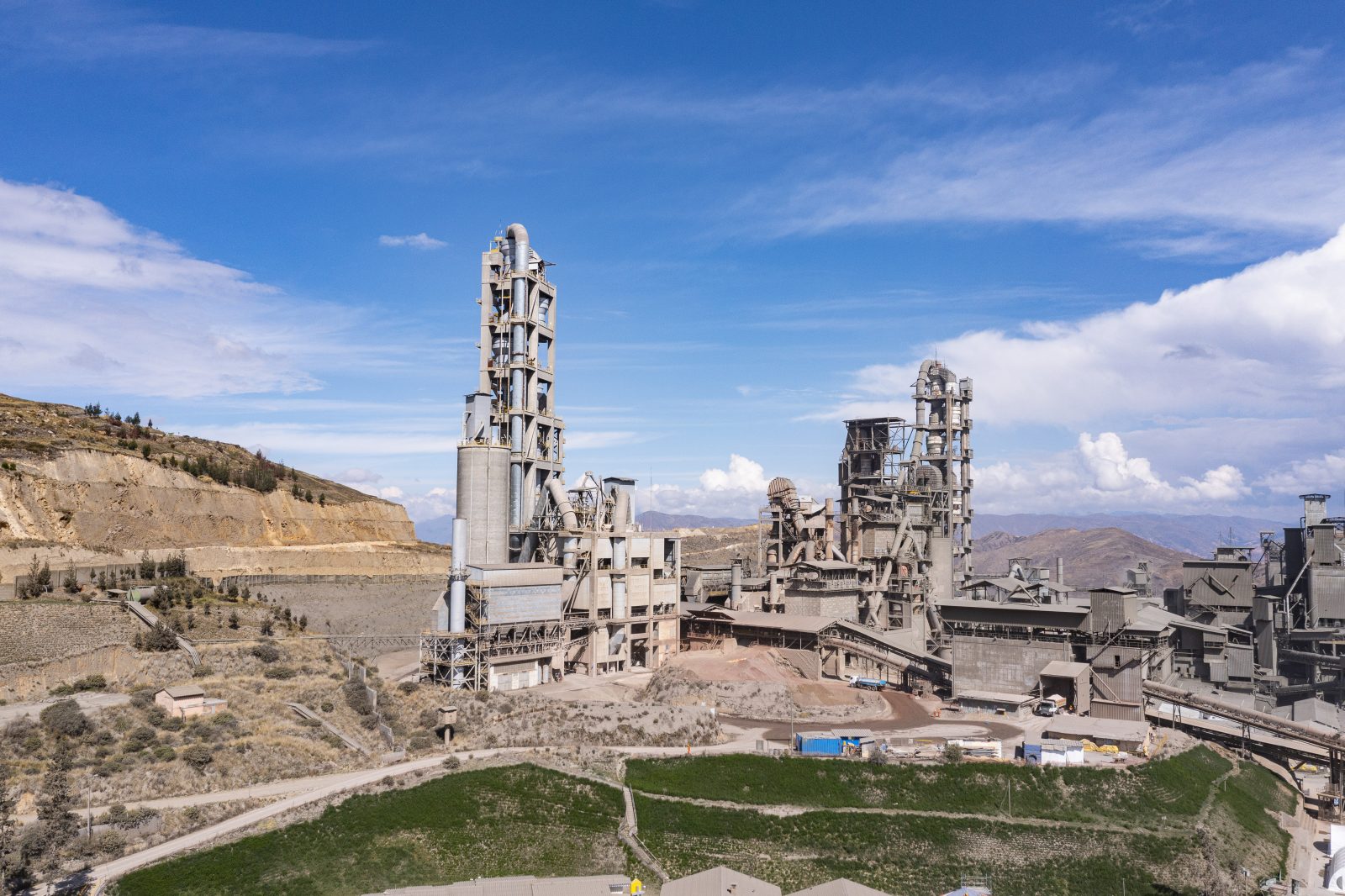
Many of these investments are linked to sustainability; what they ensure is the long-term continuity of the business. They are not growth-oriented investments. For example, we are completing, for environmental reasons, the coverage of clinker yards or the relocation of the primary crusher to unlock limestone reserves at UNACEM Peru. These are projects that ensure long-term business continuity rather than an immediate return.
In Peru you maintain a 45.5% market share, but domestic dispatches were flat while clinker exports grew 58% in the second quarter. How sustainable is this model?
Local demand continues to rise, and exports are primarily aimed at supplying our operations in Chile. This year, self-construction and housing have offset the absence of large infrastructure projects.
You announced entry into the lime business together with Calidra. What does this diversification mean?
We are entering into a partnership with Grupo Calidra, which is the largest lime producer in the world outside China, with operations in several countries and more than 100 years of industry experience. We have found significant complementarity between our cement operations and the lime business, whose know-how Calidra brings. In Peru, lime mainly serves the mining industry, especially copper. In central Peru there is a growing need for high-quality lime, in an environment where our operations and conditions are well suited to develop this business adjacent to cement. This is great news: it is a business with good profitability that will help increase the Group’s returns and allows us to diversify based on our strengths.
Are you referring to CALCEM in Tarma?
Yes. There we have access to raw materials and strong complementarity with what we already do in cement. The plant will be located in Condorcocha, Tarma.
What does UNACEM contribute to this partnership?
We bring our presence in the central region’s market, access to customers in the area, and access to raw materials in Condorcocha. We also contribute our existing commercial channels, operating in the same space where we currently sell our cements.
This is the third year you have presented consolidated Group-level information for indices such as Dow Jones and MSCI. What do these processes mean?
What we have done is compile information on governance, economic performance, and sustainability at the Group’s consolidated level. This effort partly explains the improvement in the indices and provides a better basis for benchmarking ourselves against the best companies in the sector.
This year you achieved a significant improvement in the Dow Jones sustainability index. What does this imply?
The result was 12 points higher than last year: we moved from 66 to 78 points out of 100. Over three years, we have climbed from 59 to 78. It is a strong advance that encourages us to continue closing gaps and refining processes to be among the industry’s benchmarks. Beyond the number, it confirms progress in governance, economic, and environmental performance. It is external recognition of an effort deployed across the entire organization.
What opportunities does this sustainability result open up?
This information is collected by agencies such as MSCI, which assess credit and reputational risk. It gives us greater visibility with investors, strengthens confidence in the company, and improves access to financing on better terms. It also requires us to maintain higher standards of transparency and continuous improvement, as these indices compare us directly with global industry leaders.
How would you define UNACEM’s strategy for the coming years?
We are in the final stretch of the consolidation phase of our businesses and operations. Our strategic horizon is defined for the 2022–2026 period, with a focus on consolidating operations. From there, the idea is to determine how, on that consolidated base, we define a more assertive growth strategy. This consolidation phase will extend through 2026, the year in which we will make the relevant decisions with a view toward 2030.